← Back to QUESTIONSTAR
Chapter 7

Reporting Results

19 slides · Slide 256–274

Start chapter →
256Reporting ResultsChapter opener 257The final stage of the research processThe final stage of the research process 258Why the report and presentation matterWhy the report and presentation matter 259From data result to follow-upFrom data result to follow-up 260The typical structure — eleven elementsThe typical structure — eleven elements 261What comes before the report itselfWhat comes before the report itself 262The substantive coreThe substantive core 263Principles of good writingPrinciples of good writing 264Guidelines for tablesGuidelines for tables 265Chart types at a glanceChart types at a glance 266Two rules you won't forgetTwo rules you won't forget 267The talk shapes the first impressionThe talk shapes the first impression 268Research Follow-upResearch Follow-up 269Reports across countries and languagesReports across countries and languages 270Integrity in interpretation and reportingIntegrity in interpretation and reporting 271From "Push" to "Pull"From "Push" to "Pull" 272The key takeawaysThe key takeaways 273About the AuthorAbout the Author 274References & LicenseReferences & License
All 19 slides in this chapter →
  1. 256 · Reporting Results
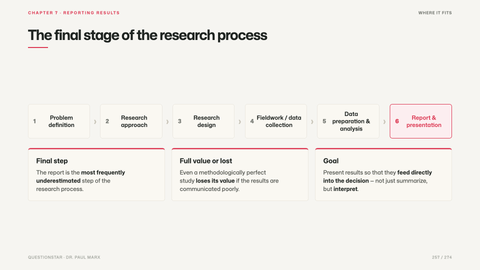
  2. 257 · The final stage of the research process
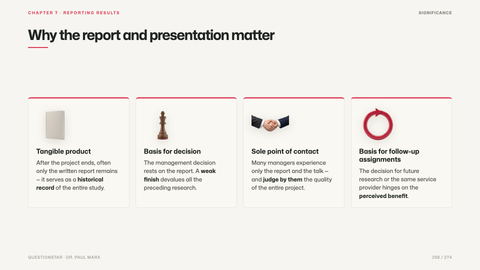
  3. 258 · Why the report and presentation matter
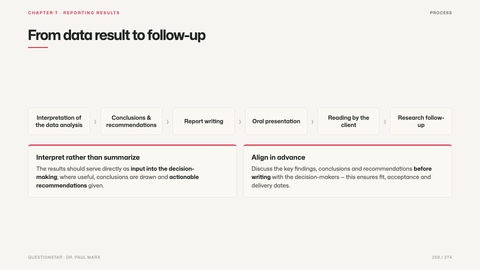
  4. 259 · From data result to follow-up
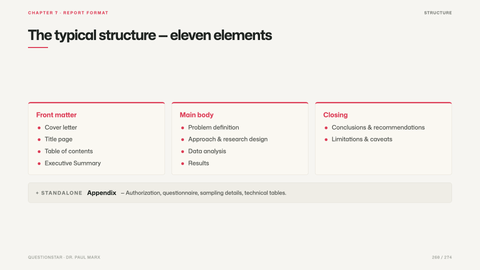
  5. 260 · The typical structure — eleven elements
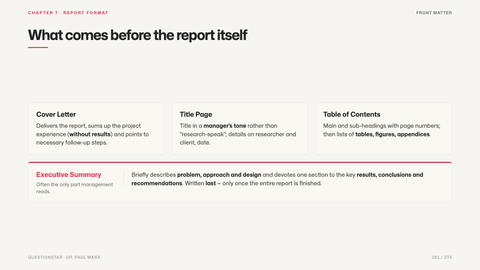
  6. 261 · What comes before the report itself
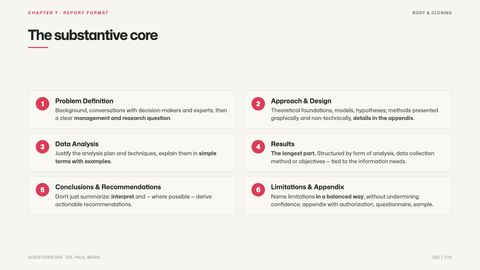
  7. 262 · The substantive core
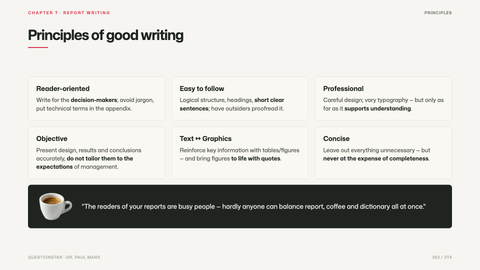
  8. 263 · Principles of good writing
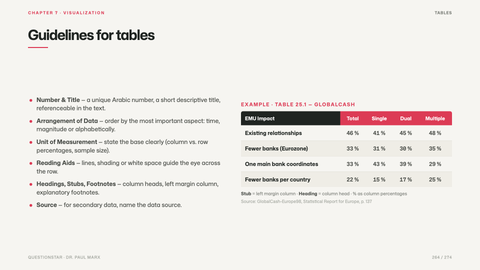
  9. 264 · Guidelines for tables
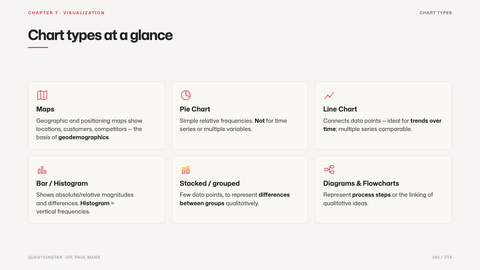
  10. 265 · Chart types at a glance
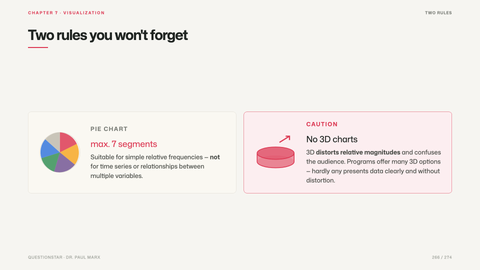
  11. 266 · Two rules you won't forget
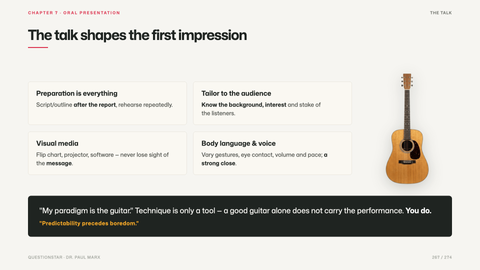
  12. 267 · The talk shapes the first impression
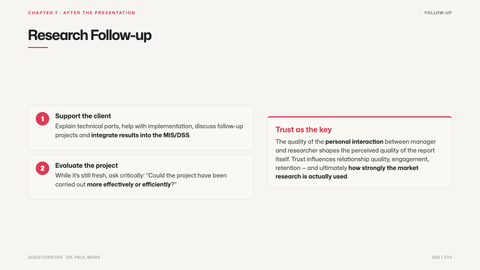
  13. 268 · Research Follow-up
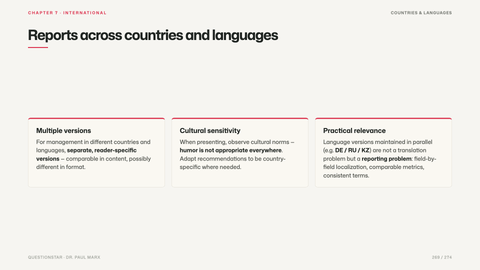
  14. 269 · Reports across countries and languages
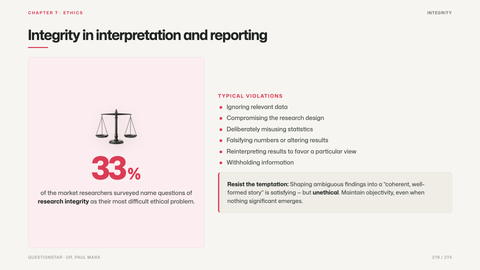
  15. 270 · Integrity in interpretation and reporting
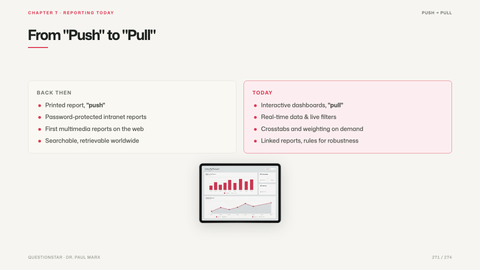
  16. 271 · From "Push" to "Pull"
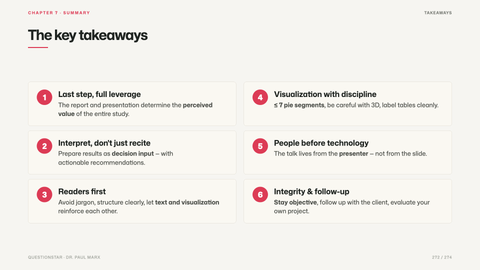
  17. 272 · The key takeaways
  18. 273 · About the Author
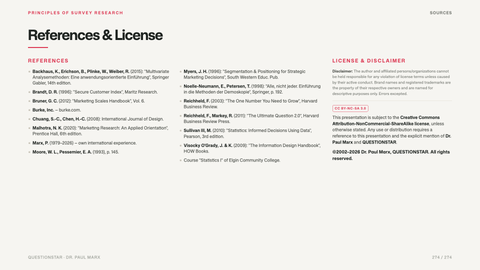
  19. 274 · References & License